
valve selection guide
Ways
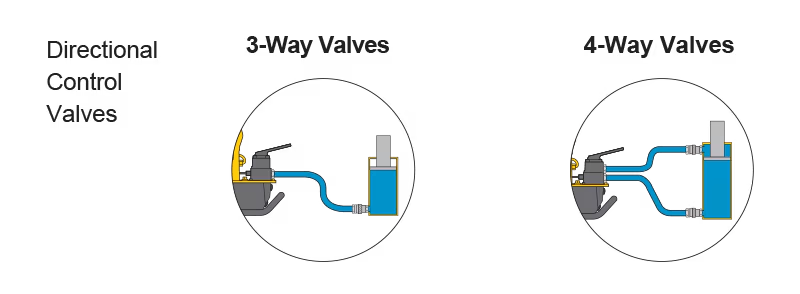
The (oil) ports on a valve.
A 3-way valve has 3 ports: pressure (P), tank (T), and cylinder (A).
A 4-way valve has 4 ports: pressure (P), tank (T), advance (A) and retract (B).
Single-Acting cylinders require at least a 3-way valve, and can, under certain instances, be operated with a 4-way valve.
Double-Acting cylinders require a 4-way valve, providing control of the flow to each cylinder port.
Positions
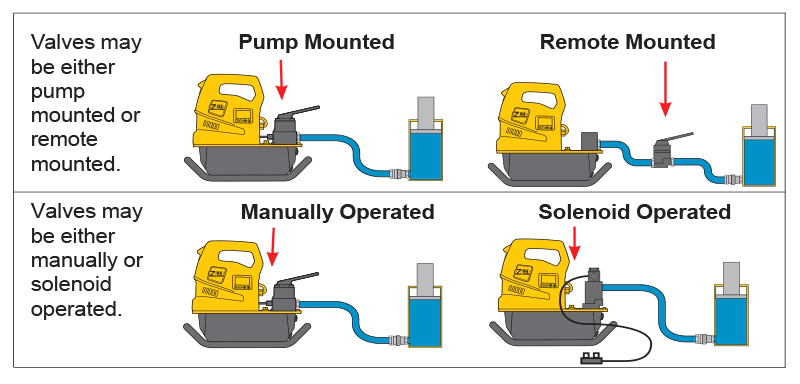
The number of control points a valve can provide. A 2-position valve has the ability to control only the advance or retraction of the cylinder. To be able to control the cylinder with a hold position, the valve requires a 3rd position.
Center Configuration
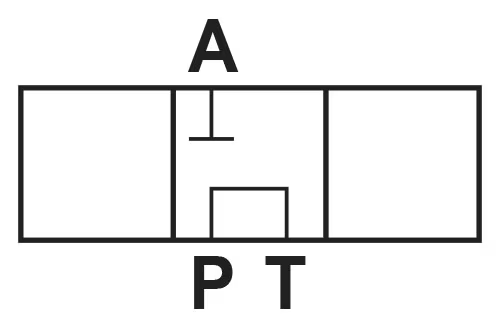
The center position of a valve is the position at which there is no movement required of the hydraulic component, whether a tool or cylinder.
The most common is the Tandem Center. This configuration provides for little to no movement of the cylinder and the unloading of the pump. This provides for minimum heat build-up.
Advanced Hold Retract
Single-acting cylinder
Controlled by a 3-way, 3-position valve.
Advance
Double-acting cylinder
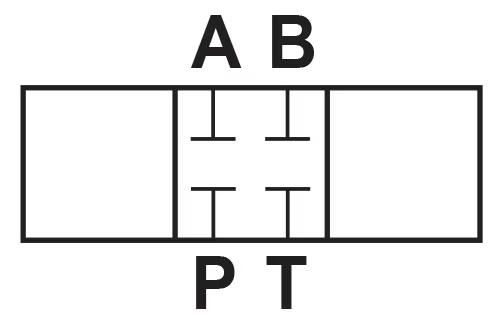
Controlled by a 4-way, 3-position valve.
Advance
The next most common is the Closed Center configuration, which is used mostly for independent control of multi-cylinder applications. This configuration again provides for little to no movement of the cylinder, but also dead-heads the pump, isolating it from the circuit. Use of this type of valve may require some means of unloading the pump to prevent heat build-up.
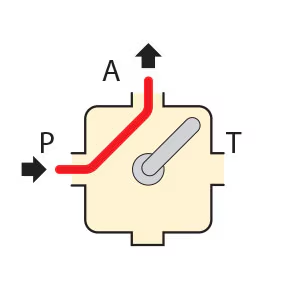
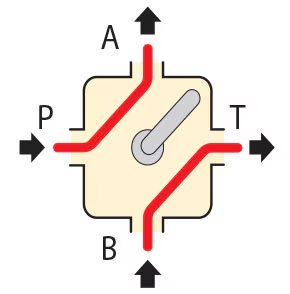
The oil flows from the pump pressure port P to the cylinder port A: the cylinder plunger will extend.
Hold
The oil flows from the pump pressure port P to the cylinder port A and from cylinder port B to tank T.
Hold
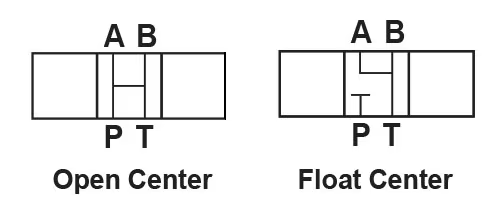
There are many more type of valves, such as Open Center and Float Center. These valves are used mostly in complex hydraulic circuits and require other special considerations.
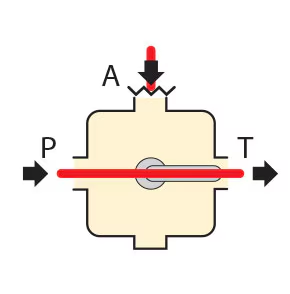
The oil flows from the pump pressure port P to the tank T. The cylinder port A is closed: the cylinder plunger will maintain its position.
Retract
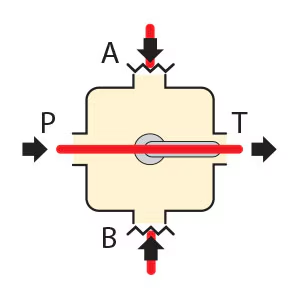
The oil flows from the pump pressure port P to the tank T. The cylinder ports A and B are closed: the cylinder plunger will maintain position.
Retract
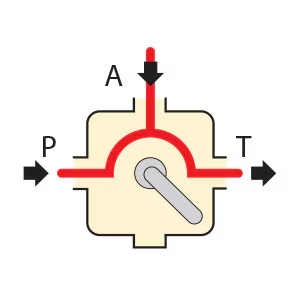
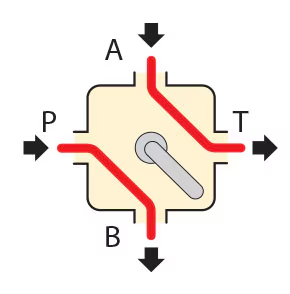
The oil flows from the pump and cylinder port A to the tank T: the cylinder plunger will retract.
The oil flows from the pump pressure port P to cylinder port B and from cylinder port A to tank T: the cylinder plunger will retract.